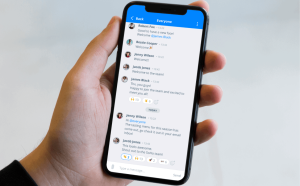
If you’re searching for sling messaging, the direct answer is that it’s the built-in communication system inside the Sling workforce management platform, letting managers and employees exchange private and group messages alongside scheduling tools without a separate app. According to the U.S. Bureau of Labor Statistics (BLS), the most recent available data shows roughly 80.8 million U.S. workers were paid hourly rates, a workforce segment where shift-based communication tools like Sling are widely deployed across retail, food service, and healthcare.
What Sling Messaging Actually Is
Sling is a workforce management platform that combines employee scheduling with integrated communication tools [1][6]. The messaging layer is designed to reduce reliance on external apps such as text threads or third-party chat services by keeping conversations attached to the same system that holds schedules, time clocks, and labor budgets [9]. Within the platform, users send private one-to-one messages or group messages depending on their account tier [2][3][4].
This matters because fragmented communication has measurable costs. According to a McKinsey analysis frequently cited in workforce literature, knowledge workers spend close to 20% of the workweek searching for internal information and chasing colleagues. For hourly and shift-based teams, consolidating that exchange into one tool reduces missed shifts and miscommunication. The BLS reports that roughly 80.8 million Americans are paid hourly, and scheduling-plus-messaging platforms target exactly this group. Sling’s communication suite also includes a team newsfeed, announcements, file sharing, and task management features that extend beyond simple direct messages [1][4][5][8]. As of 2026, the messaging tools remain integrated directly into both the web dashboard and the mobile apps, so a manager can post an open shift and notify staff in the same workflow.
How Private and Group Messaging Work
Sling separates messaging into two formats: private messages and group conversations [2]. A private message is a direct thread between two people, while a group conversation can include an entire organization, a specific location, a position, or a custom-defined group [2]. This segmentation lets a manager reach, for example, only weekend kitchen staff without notifying the front-of-house team.
The platform also gives Business-tier managers a notable control: they can send the same message to multiple recipients as individual private threads rather than one shared group, which is useful for one-to-one reminders that shouldn’t be visible to the whole team [2]. Managers on Business accounts can additionally restrict posting rights, meaning staff may be limited to reading announcements rather than replying broadly [2]. Messages can be edited or deleted within 12 hours of sending, after which they become permanent [2]. According to Pew Research, 98% of U.S. adults own a cellphone and 91% own a smartphone, so the mobile-first design of Sling messaging aligns with how the American workforce actually communicates. The 12-hour edit window is a built-in safeguard against the permanence problems common to SMS and unmanaged group chats.
Free vs. Premium vs. Business Messaging Limits
Messaging capability in Sling is tied directly to account tier, and the differences are concrete rather than cosmetic [2]. Free accounts have access to private messaging only [2]. Premium and Business accounts unlock both private and group messaging [2]. Business accounts add the advanced controls described above: multi-recipient private sends and restricted posting rights [2].
Pricing for workforce scheduling platforms in this category generally ranges from $0 for free tiers to roughly $2–$6 per user per month for paid plans, according to listings aggregated on Capterra and G2 [6][7]. Because vendor pricing changes, confirm current rates directly with Sling before budgeting. The Federal Trade Commission (FTC) advises consumers and small businesses to verify subscription terms, auto-renewal clauses, and cancellation policies before committing to any recurring software charge. For a business comparing tools, the messaging tier is a meaningful decision point: a 12-person coffee shop that only needs one-to-one reminders may function on the free plan, while a multi-location restaurant group coordinating 60–80 staff across positions will require the Premium or Business group-messaging features [2]. Map your communication patterns to the tier before paying.
How Messaging Connects to Scheduling and Time Tracking
The strategic value of Sling messaging is its integration with the rest of the platform [1][6]. Scheduling features let managers build schedules, handle time-off requests, approve shift trades, and post open shifts that employees can claim directly [5][6][7]. When a shift opens, messaging notifies eligible staff in the same system, closing the loop between the gap and the fill.
Time tracking runs through a designated terminal or the mobile app, with alerts engineered to reduce tardiness and time theft, and managers retain the ability to edit timesheets [3][6]. According to the American Payroll Association, businesses lose an estimated 1%–5% of gross payroll to time theft and “buddy punching” annually, which is precisely the leakage these alert features target. Labor-cost optimization tools help managers control overtime and stay within budget [6][10]. Because overtime is governed federally by the Fair Labor Standards Act (FLSA), which requires time-and-a-half pay beyond 40 hours in a workweek, real-time labor alerts paired with messaging let a manager warn an employee approaching overtime before the cost is incurred. The integration means a single notification can reference a schedule change, a clock-in reminder, and a budget cap simultaneously.
How to Choose Between Sling and Standalone Chat Apps
Deciding whether to use Sling messaging or a general chat tool comes down to whether communication and scheduling need to live together. Standalone apps like consumer text threads handle conversation but cannot tie a message to an open shift, a timesheet, or a labor budget. According to G2 and Capterra user reviews, the integration is the most-cited advantage of Sling over generic messaging [6][7].
Use this decision frame. Choose Sling messaging if: you manage 10 or more hourly staff, you post open shifts regularly, and you need announcement controls or restricted posting [2]. Choose a standalone chat app if your team is salaried, your headcount is under 5, and scheduling is informal. The cost comparison favors integration when you would otherwise pay for two separate tools; combined scheduling-and-messaging platforms in this category run roughly $0–$6 per user per month [6][7], versus stacking a scheduler plus a paid team-chat subscription that can reach $4–$8 per user monthly on its own. Before switching, review the Better Business Bureau profile and current Consumer Reports guidance on subscription software to confirm billing transparency and cancellation terms.
Red Flags and Compliance Risks to Avoid
Workplace messaging carries legal and privacy exposure that managers should treat seriously. Work-related electronic communications can become discoverable in employment disputes, and the FTC enforces against deceptive data-handling practices. Avoid using any messaging channel to discuss disciplinary actions, wages, or medical information that should be documented through formal HR channels instead.
Be alert to specific red flags. First, the 12-hour edit-and-delete window in Sling means a message becomes permanent afterward [2], so do not rely on deletion to retract a sensitive message. Second, the National Labor Relations Act (NLRA) protects employees’ rights to discuss working conditions and wages with one another; using restricted posting rights to suppress that protected activity can create legal liability. According to BLS data, union membership covered roughly 10% of U.S. wage and salary workers in the most recent figures, but NLRA protections extend to most non-supervisory employees regardless of union status. Third, never store sensitive personal data such as Social Security numbers in chat threads. If you receive a billing dispute or suspect deceptive subscription practices, you can file a complaint with the FTC consumer complaint database. As of 2026, treating the messaging log as a discoverable business record is the safest posture.
What Experts Recommend
Workforce management specialists and HR technology analysts converge on several practices for tools like Sling messaging. First, they recommend separating operational announcements from casual conversation by using the announcements and newsfeed features for one-way broadcasts and reserving group threads for genuine back-and-forth [1][8]. According to Gartner research on internal communication, organizations that segment channels by purpose report lower message fatigue.
Second, experts advise configuring posting permissions deliberately on Business accounts so that company-wide channels are not flooded; restricting reply rights on broadcast announcements keeps signal high [2]. Third, payroll and compliance professionals stress pairing messaging with the platform’s labor alerts to prevent unplanned overtime under the FLSA, since a single timely message can avert time-and-a-half costs that run 50% above base wages. Fourth, analysts at review platforms such as G2 and TrustRadius note that adoption succeeds when managers train staff during onboarding rather than expecting organic uptake [3][6]. Finally, security-minded consultants recommend a written internal policy stating that work messaging is a business record, given that Pew Research finds 91% of U.S. adults carry smartphones and will use them for work communication regardless of policy. A short, documented standard reduces both confusion and legal exposure.
Steps to Set Up and Start Using Sling Messaging
Getting messaging operational follows a clear sequence. First, create your organization account and select a tier; remember that the free plan limits you to private messaging while Premium and Business unlock group conversations [2]. Second, import or invite your roster so each employee appears in the directory and can be assigned to locations and positions [5][7]. Accurate position and location tagging is what makes targeted group messages possible later [2].
Third, configure groups by location, position, or custom set so a single message reaches exactly the right segment [2]. Fourth, on Business accounts, set posting permissions and decide which channels are broadcast-only [2]. Fifth, connect messaging to your scheduling workflow by enabling open-shift notifications so eligible staff are alerted automatically [5][6]. According to Capterra and G2 user reviews, teams that complete this setup before going live report smoother adoption [6][7]. Budget roughly $0–$6 per user per month depending on tier [6][7], and confirm billing terms against FTC subscription guidance before payment. As a final safeguard, document an internal messaging policy and review it during onboarding. The entire setup for a small team of 10–20 employees can usually be completed in a single session, after which managers schedule, notify, and track time from one integrated dashboard.
References
- Sling: Free Employee Scheduling And Shift Planning Made Easy
- Starting a message | Sling Help Center
- Sling Reviews & Ratings 2026
- Honest Sling Scheduling Review: Features, Pricing & More
- Sling Schedule Review: How Sling Works as an Employee Scheduling App
- Sling Reviews: Details, Pricing, & Features | G2
- Sling Software Pricing, Alternatives & More | Capterra
- Employee and Team Communication App | Sling
- Sling Review: Pricing, Features, Pros & Cons, Ratings & More | Research.com
- Sling: Employee Scheduling App – App Store – Apple
Frequently Asked Questions
- Is Sling messaging free to use?
- Sling’s free account includes private one-to-one messaging, so basic communication costs nothing. However, group messaging—conversations with an entire team, location, or position—requires a Premium or Business plan. Paid tiers in this software category generally run about $0–$6 per user per month according to Capterra and G2 listings, though you should confirm current pricing directly with Sling. Business accounts add advanced controls like sending one message as separate private threads and restricting who can post. If you only need direct reminders for a small team, the free tier may suffice; larger or multi-location teams usually need the paid group features.
- Can you delete a message in Sling after sending it?
- Yes, but only within a limited window. Sling lets you edit or delete a message up to 12 hours after sending it, after which the message becomes permanent and cannot be changed or removed. Because of this, do not rely on deletion to retract sensitive content—treat every message as a potential business record. The FTC and employment-law guidance both recommend keeping disciplinary, wage, and medical discussions in formal HR channels rather than chat. If accuracy matters, double-check a message before the 12-hour window closes, since edits afterward are not possible.
- What’s the difference between private and group messaging in Sling?
- A private message is a direct thread between two individuals, available on every account tier including free. A group conversation includes multiple people and can target everyone in the organization, a specific location, a position, or a custom group—this requires a Premium or Business plan. Business accounts gain an extra capability: managers can send the same message to multiple people as separate private threads, so recipients don’t see each other, plus they can restrict who is allowed to post in a channel. Choose group messaging when coordinating shifts across teams and private messaging for one-to-one reminders.
- Does Sling messaging replace texting employees?
- For most operational communication, yes. Sling integrates messaging with scheduling, time tracking, and labor budgets, so a notification can reference an open shift or a clock-in reminder in the same system—something standard texting cannot do. Pew Research reports 91% of U.S. adults own smartphones, so a mobile-first platform fits how teams already communicate. Keeping work messages in one managed tool also helps with recordkeeping and reduces fragmentation across multiple chat apps. That said, document an internal policy noting that work messaging is a business record, and reserve sensitive HR matters for formal channels rather than any chat tool.
- Is Sling messaging legal and compliant for workplace use?
- Sling messaging is legal for workplace use, but employers must use it carefully. Work-related messages can become discoverable in employment disputes, so avoid documenting wages, discipline, or medical details in chat. The National Labor Relations Act protects employees’ rights to discuss working conditions, so using restricted posting features to suppress that activity can create liability. Never store Social Security numbers or other sensitive personal data in threads. If you suspect deceptive subscription billing, you can file a complaint with the FTC consumer complaint database. A short written messaging policy reviewed during onboarding reduces both confusion and legal exposure for your organization.
- How do I set up group messaging in Sling?
- First, upgrade to a Premium or Business plan, since group messaging is not available on the free tier. Next, invite your full roster and tag each employee with their correct location and position—accurate tagging is what lets you target groups precisely. Then create groups by location, position, or a custom set so a single message reaches exactly the intended audience. On Business accounts, configure posting permissions to keep broadcast channels from being flooded. Finally, enable open-shift notifications so scheduling and messaging work together. For a small team of 10–20, this setup can usually be completed in one session.